AI didn't replace art direction — it made it priceless

A year ago, a good image was hard to make. Today it takes seconds. That sounds like progress, and it is — but it changed the value of everything. When everyone can generate a polished frame, the polished frame stops being the product. What’s left is the part the machine can’t do for you: the decision about what should exist in the first place.
I run an AI creative studio. I work with these tools every day, including as an official Magnific partner. And I’ll tell you something the hype won’t: the tool is not the advantage. The advantage is the eye behind it. The brands winning right now aren’t the ones with the best subscription. They’re the ones with the best direction.
Prompting is now free
Let’s be honest about what prompting actually is. It’s typing a description and accepting what comes back. Anyone can do it. Your competitor can do it. The intern can do it. That’s not a skill anymore — it’s a commodity, and commodities don’t build brands.
The moment a capability becomes universal, it stops differentiating you. AI image generation crossed that line. So if your strategy is “we use AI to make images,” you’ve described what everyone else is also doing. The output looks fine. Fine is the problem. Fine is invisible.
What still costs something — what’s still scarce — is knowing which image is right for your brand, and why. The machine gives you a thousand options. It has no opinion about which one is correct. That opinion is the entire job.
What direction actually means
People hear “art direction” and think it’s picking a nice photo. It isn’t. Direction is a chain of decisions made before, during, and after generation, each one shaping whether the work feels like your brand or like everyone’s brand.
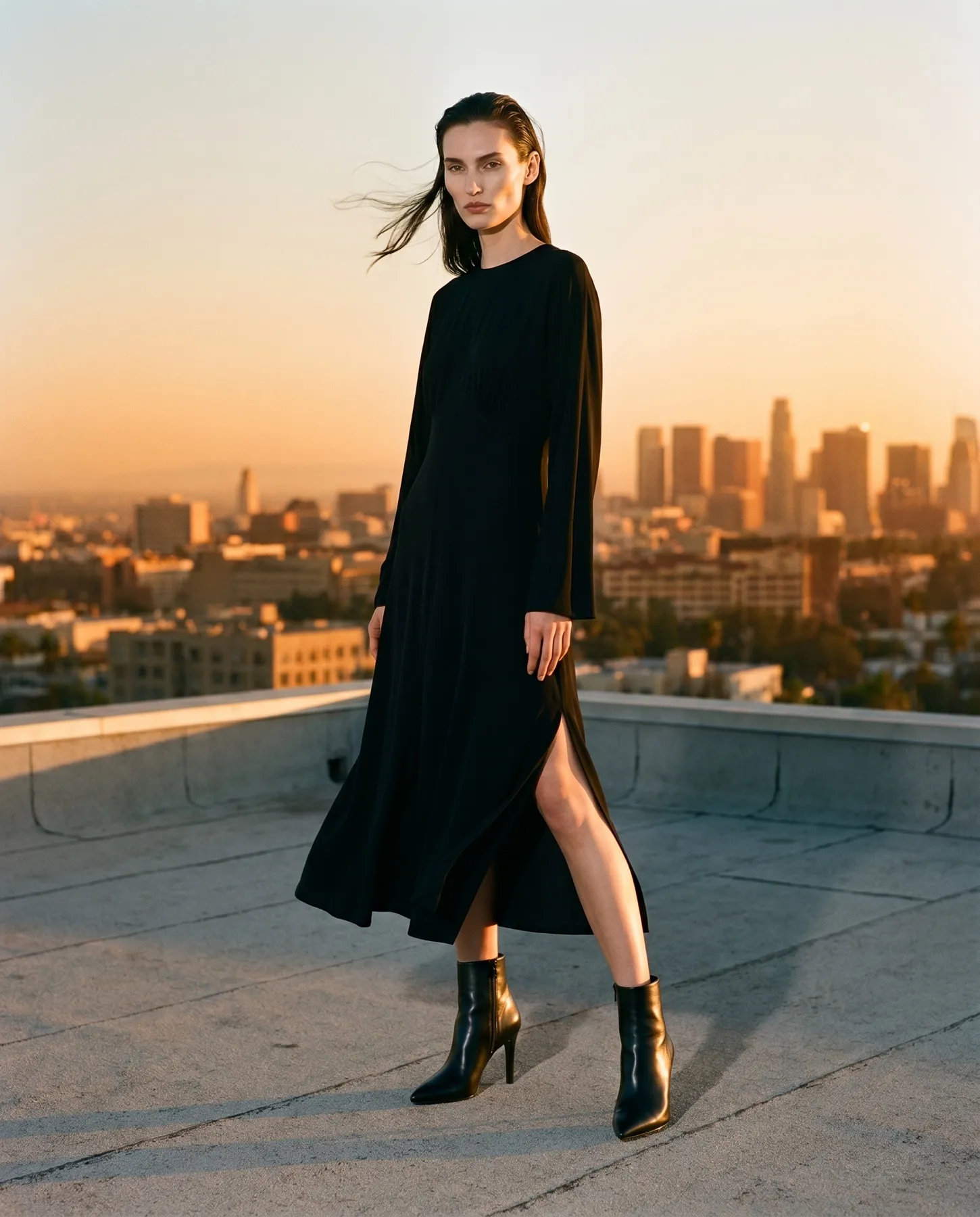
It starts with concept: what idea is this campaign carrying, and what should someone feel in the first half-second. Then references — the visual language that anchors the work in a world instead of a void. Then the things that separate editorial from generic: light that has intent, composition that leads the eye, casting and styling that fit your audience rather than the algorithm’s defaults.
Then comes the part almost no one talks about: consistency and the edit. A campaign isn’t one image; it’s a system that has to hold together across formats, products, and months. And the final, ruthless skill is selection — killing the ninety good frames to ship the one that’s right. The machine can’t make that cut. A director can.
Taste is the moat
Taste is hard to define and impossible to fake, which is exactly why it’s valuable. It’s the accumulated judgment that tells you a frame is half a stop too bright, that the styling reads cheap, that the composition is technically correct and emotionally dead.
You can’t prompt your way to taste. You can’t subscribe to it. It comes from years of looking, comparing, deciding, and being wrong enough times to get right. That’s why it’s a moat. When the tools are identical for everyone, the only durable edge is the judgment applied to them — and judgment doesn’t scale with a faster GPU.
This is also what protects your brand identity. Without direction, AI pulls everything toward the same glossy average, because that’s what it was trained on. Strong direction pulls the other way — toward something that could only be yours. That tension, held deliberately, is what makes a brand recognizable.
Hire a director, not a tool
A tool gives you capacity. A director gives you decisions. You can have all the capacity in the world and still produce noise, because volume without judgment is just more noise, faster.
When you work with me, you’re not renting software. You’re hiring the part the software can’t replace: the concept, the references, the light, the casting, the consistency, the final cut. I use AI to move fast — up to 70 percent less production time, up to 90 percent savings, major-production quality in days. But speed and cost are the easy promises. The real value is that what ships actually looks like your brand, on purpose.
The bottom line
The tools got cheap, and that’s good news — for the people who know what to do with them. Generation is solved. Direction isn’t, and it won’t be, because taste doesn’t come in an update. If your images look like everyone else’s, the fix isn’t a better prompt. It’s a director who decides what your brand should look like and makes the machine obey. That’s the work I do. If you want imagery that’s unmistakably yours, built fast and built right, let’s talk: get in touch.